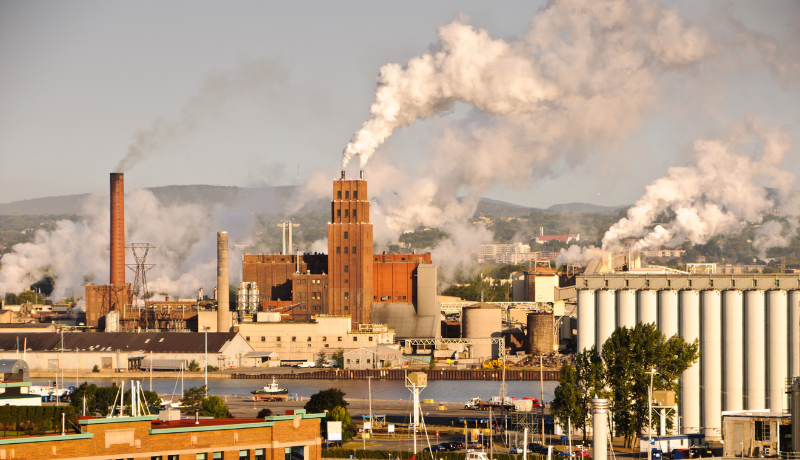
On Thursday, February 12, US President Donald Trump announced that the Environmental Protection Agency (EPA) is repealing the endangerment finding, an Obama-era landmark legal and scientific finding that proved greenhouse gases endanger the health and welfare of current and future generations. This determination gave the EPA authority to regulate greenhouse gases (GHGs) and is the foundation of many federal regulations including the Clean Air Act which sets standards on vehicle and power plant emissions, for example. Without the endangerment finding, lawmakers may repeal emission-limiting regulations and ramp up fossil fuel consumption as the policies no longer have the scientific and legal foundation of the finding to rely on.
The Trump Administration’s stance on the endangerment finding is that it is a “disastrous policy”, with President Trump stating at a news conference that “this determination has no basis in fact – none whatsoever. And it has no basis in law.” Interior Secretary Doug Burgum aligned on the President’s view, stating that “CO2 was never a pollutant”. However, the finding was originally derived from internal experts at the EPA, including the US National Academies of Sciences, Engineering and Medicine, as well as the broader scientific community. Moreover, the finding came after years of extensive scientific review citing overwhelming evidence that GHG emissions drive global climate change and harm human health and vulnerable communities.
Immediate Implications on Carbon Policy
On Wednesday, ahead of the official repeal, the Energy Department announced it will spend $175 million to extend the lives of six coal plants across the US. This is poised to impact steel and cement manufacturers, which are historically coal intensive industries. Producing blast-furnace steel using coal is cheaper than alternatives, and this expected increase in coal production is anticipated to further reduce prices. As a result, this announcement is expected to directly impact regulated American and Canadian steel-makers pricing competitiveness and further exacerbate those producing in jurisdictions subject to carbon pricing.
Following the announcement Thursday, the EPA revealed that they will be removing all greenhouse gas emissions standards for vehicles, signaling that manufacturers are no longer legally required to track, report, or limit GHG emissions for vehicles. This announcement has implications for Canadian auto manufacturers, as American competitors will see a decrease in costs without needing to adhere to these regulations, affecting competitiveness in an already tariff impacted industry. This comes just one week after Canadian Prime Minister Mark Carney announced a new strategy for the auto industry, which loosened existing mandates on manufacturers, but still aims to reduce emissions and achieve 90% EV sales by 2030.
The Future of Carbon Policy
The tenure in which this repeal will stay in effect as well as its wide-reaching impacts remain uncertain. The Natural Resources Defense Council, American Lung Association, the state of California, and other organizations announced their intention to sue and challenge the repeal shortly following the announcement. However, despite the administration facing significant scientific evidence, the legal battles are likely to take years to resolve. There is some speculation that the future of the repeal could ultimately depend on the United States Supreme Court, who would have to reverse their stance on their 2007 decision to acknowledge the harm of GHG emissions and grant the EPA authority to regulate them to remain in alignment with the Trump Administration.
States that lead in climate policy, such as California, Washington, and New York may now have more autonomy to govern under state law, as the repeal indicates that GHG pollutants are no longer under the purview and authority of the EPA to regulate. State level programs such as California’s climate policies will not be halted, as they already rest on state law, not federal. Quebec, linked with California, is currently finalizing 2026 amendments to tighten its own cap-and-trade rules, indicating this program remains strong despite US federal pushback.
The response from the Canadian federal government remains to be seen, as Prime Minister Mark Carney has made recent announcements to support Canadian autonomy and strengthen industrial manufacturers impacted by tariffs, while affirming his governments support to meet climate goals via “Climate Competitiveness”. Nevertheless, this announcement from the United States hightens Canadian industrial competitiveness concerns, and the subsequent impact on the nation’s ability to carefully balance economic and environmental priorities shows no signs of slowing.
ClearBlue is actively monitoring these developments, for more information about ClearBlue’s advisory services or market intelligence coverage, please contact us.